Simple grocery shortcuts, quick meal ideas, and realistic habits that make healthy eating easier, even on your busiest days.
You get home after a long day, open the refrigerator, and realize you have absolutely no idea what to make for dinner.
You’re hungry, tired, and the last thing you want to do is spend an hour cooking and cleaning up.
Sound familiar?
One of the biggest misconceptions about healthy eating is that it requires cooking everything from scratch. Elaborate meal prep, perfectly portioned containers, and a refrigerator full of fresh ingredients might look appealing, but they’re not realistic for everyone.
The good news? You don’t have to cook every day to eat healthier.
The key is making nutritious foods convenient enough that choosing them feels easier than starting from scratch.
Here are seven practical ways to make that happen.
1. Stop Thinking Every Meal Needs to Be Homemade
Healthy eating doesn’t have to mean preparing every ingredient yourself.
There is absolutely nothing wrong with using a rotisserie chicken, microwaveable brown rice, frozen vegetables, or prewashed salad greens.
These foods can help you put together a satisfying meal in minutes.
For example:
Rotisserie chicken + microwaveable brown rice + steamed broccoli
Prewashed salad greens + canned chickpeas + cherry tomatoes + olive oil vinaigrette
Whole grain wrap + hummus + sliced chicken + spinach
Plain Greek yogurt + berries + walnuts + oats
These aren’t complicated recipes. They’re simple combinations of foods that provide useful nutrients without requiring much preparation.
Try this: The next time you’re grocery shopping, look for two or three ingredients that could replace a cooking step.
2. Build Meals Around Protein, Fiber, and Healthy Fats
When you’re short on time, having a simple way to put meals together can eliminate a lot of unnecessary decisions.
Instead of searching for a new recipe every night, think about combining three components:
Protein: Chicken, fish, eggs, Greek yogurt, beans, or lentils.
Fiber-rich foods: Vegetables, fruit, beans, lentils, or whole grains.
Healthy fats: Olive oil, avocado, nuts, or seeds.
For example, you could combine canned salmon, white beans, cucumber, and olive oil for a quick lunch.
Or make a simple breakfast with Greek yogurt, raspberries, chia seeds, and almonds.
You don’t need to calculate nutrients for every meal. This is simply a practical way to include a variety of nourishing foods.
And once you become familiar with a few combinations you enjoy, putting meals together gets easier.
3. Keep a Few No-Cook Meals on Repeat
Some days, even 15 minutes of cooking feels like too much.
That’s when having a few reliable no-cook meals can make all the difference.
Here are some ideas worth keeping in your regular rotation:
Mediterranean chickpea bowl
Combine canned chickpeas, cucumber, cherry tomatoes, feta, and a drizzle of olive oil and lemon juice.
Chicken and avocado wrap
Fill a whole grain tortilla with ready-to-eat chicken, avocado, spinach, and your favorite dressing.
Greek yogurt breakfast bowl
Top plain Greek yogurt with berries, chopped nuts, and oats.
White bean and tuna salad
Mix canned white beans, tuna, chopped celery, lemon juice, and olive oil. Serve over greens or with whole grain crackers.
These are flexible meal ideas rather than exact recipes. Adjust the ingredients and portions to suit your preferences and appetite.
The goal is to have options that require almost no thought when you’re hungry.
4. Stock Your Kitchen for the Days That Don’t Go as Planned
Most people grocery shop with good intentions.
They buy fresh produce, plan several meals, and expect to have time to cook.
Then life happens.
Meetings run late. Plans change. You’re exhausted by dinner.
That’s why I recommend keeping a few reliable ingredients available for the days when your original plan falls apart.
In your pantry
Canned beans and lentils
Canned salmon or tuna
Whole grain pasta
Brown rice or quinoa packets
Nuts and seeds
Olive oil and simple seasonings
In your refrigerator
Plain Greek yogurt
Eggs
Prewashed salad greens
Hummus
Ready-to-eat protein options
Fresh fruit
In your freezer
Plain frozen vegetables
Frozen berries
Frozen fish fillets
Previously cooked meals or individual portions
Frozen and canned produce can be nutritious alternatives to fresh, especially when you choose options without excess added sugar or sodium.
You don’t need to buy everything on this list. Start with foods you already enjoy and know you’ll use.
The best kitchen staples are the ones that actually make your life easier.
5. Make One Ingredient Work for Multiple Meals
Traditional meal prep often involves cooking several complete meals in advance.
That works for some people, but it’s not the only option.
Instead, try preparing one versatile ingredient that you can use in different ways.
For example, a batch of cooked chicken could become:
Chicken and vegetable bowls
Chicken wraps
A protein addition to a bagged salad
Chicken and black bean quesadillas
Or prepare a pot of lentils to use in salads, grain bowls, or soups.
This approach gives you flexibility without committing to eating the exact same meal for several days.
And if you genuinely don’t have time to cook anything in advance, purchasing a ready-to-eat ingredient can accomplish the same goal.
6. Have a Plan for Takeout and Restaurant Meals
Eating healthier doesn’t mean you have to stop ordering takeout.
Sometimes purchasing dinner is the most practical option, and that’s okay.
The goal is to make choices that support your overall eating habits.
A few simple strategies can help:
Look for meals that include vegetables and a source of protein.
Consider adding a side salad or vegetables when the main dish doesn’t include them.
Choose sauces and dressings based on your preferences, keeping portions in mind.
Save leftovers when restaurant portions are larger than you want.
Keep a short list of restaurants where you know you can find meals you enjoy.
You don’t have to make the most nutritious choice every single time you eat out.
Consistency over time matters more than trying to make every meal perfect.
7. Create a Backup Plan Before You Need One
This might be the most valuable strategy of all.
Think about what typically happens when your day doesn’t go as planned.
Do you skip lunch because meetings run late? Order takeout because nothing is ready for dinner? Grab whatever is convenient because you’re too hungry to think?
Rather than relying on willpower in those moments, decide ahead of time what you’ll do.
For example:
If I don’t have time to cook dinner, I’ll use a rotisserie chicken and frozen vegetables.
If my afternoon gets busy, I’ll keep Greek yogurt and fruit available for a quick snack.
If I forget to plan lunch, I’ll order one of my usual meals from a nearby restaurant.
These simple if-then plans help turn good intentions into specific actions.
As a health coach, I encourage people to focus on changes that fit their actual lives, not an ideal version of their schedules.
A plan that works on your busiest day is often more valuable than an elaborate routine you can only follow when everything goes perfectly.
What Does a Day of Healthy Eating Without Cooking Look Like?
Here’s an example of how simple it can be.
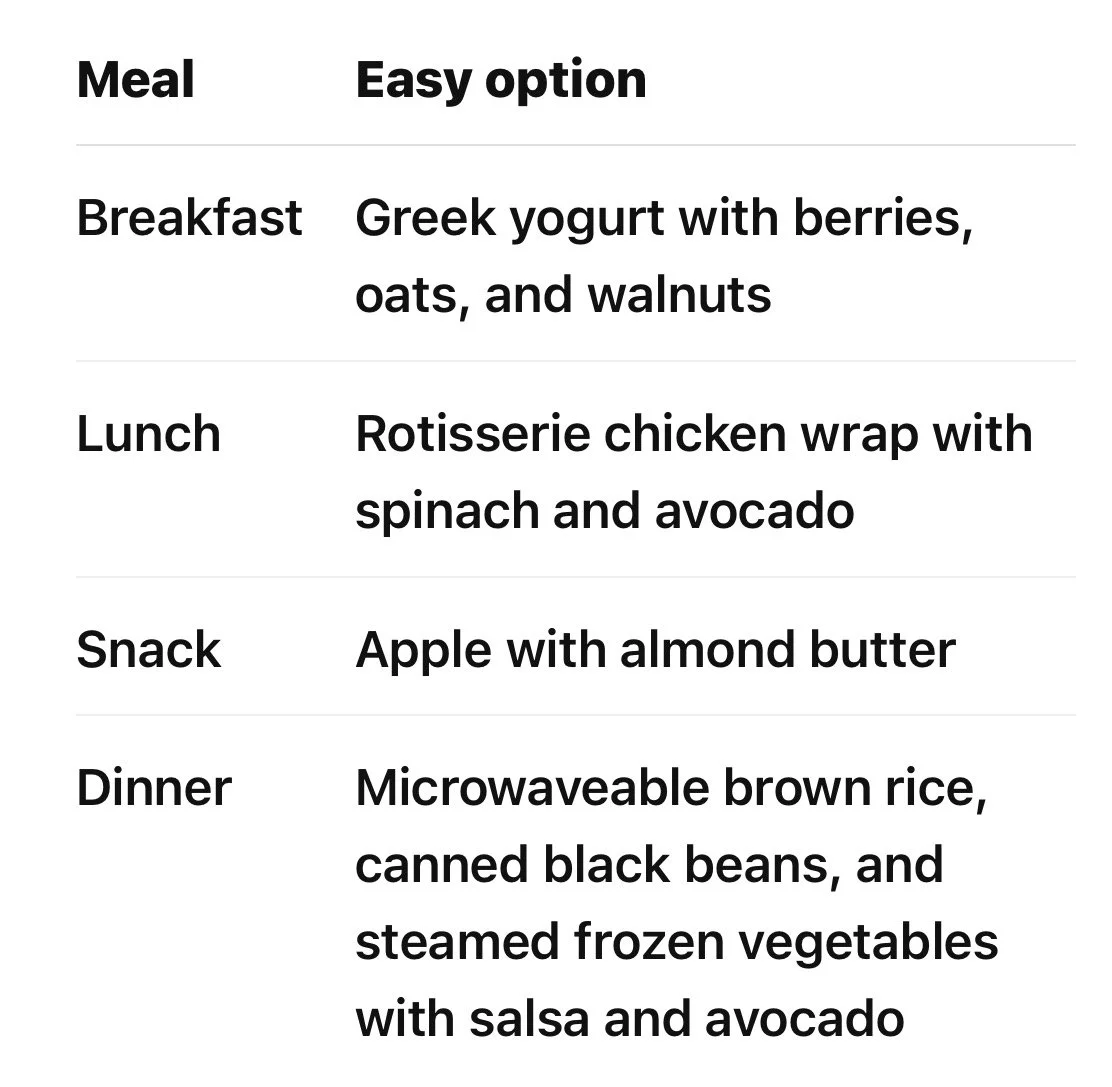
No elaborate recipes. No hours of meal prep.
Just convenient ingredients combined into meals that include protein, fiber-rich foods, and healthy fats.
This is an illustrative day of meal ideas, not an individualized meal plan. Your food choices and portions should reflect your own needs, preferences, and any guidance from your healthcare team.
Frequently Asked Questions
Can you eat healthy without cooking every day?
Yes. Healthy eating can include ready-to-eat proteins, canned beans, frozen vegetables, fresh fruit, whole grains, and other convenient ingredients. You can combine these foods into nutritious meals without cooking everything from scratch.
Are frozen vegetables as healthy as fresh vegetables?
Frozen vegetables can be a nutritious alternative to fresh produce. They’re convenient, last longer, and make it easier to include vegetables in meals. Look for plain varieties or compare labels for added sodium and sauces.
What are some healthy foods that require no cooking?
Greek yogurt, fruit, nuts, hummus, canned beans, ready-to-eat chicken, prewashed greens, and whole grain bread are convenient options. Combining foods from different groups can help create more satisfying meals.
How can I eat healthier if I rely on takeout?
Start with small changes. Choose meals that include protein and vegetables, add fiber-rich sides when practical, and identify a few reliable restaurant options. You don’t have to stop eating takeout to improve your overall eating habits.
Is meal prep necessary for healthy eating?
No. Meal prep can be helpful, but it’s not required. Keeping convenient ingredients on hand, repeating simple meals, and having backup options can also support consistent healthy eating.
Make Healthy Eating Fit Your Life
Eating healthier doesn’t require spending every Sunday preparing meals or cooking from scratch seven nights a week.
It starts with making a few practical changes that reduce the effort involved in choosing nutritious foods.
Maybe that means stocking your freezer with vegetables, finding three no-cook lunches you enjoy, or keeping a backup dinner available for particularly busy evenings.
You don’t need to change everything at once.
Start with one strategy that would make your next busy day easier.
Over time, those small changes can become habits that support your health without making your schedule more complicated.
Want to Make Healthy Eating Even Easier?
My free Meals in Minutes Guide is designed to help take some of the guesswork out of getting food on the table.
Written by Coach Jess, NBC-HWC, Personalized Paths Health Coaching.
This article provides general wellness and nutrition education and is not individualized medical or dietary advice.
