You can eat the stuffing, enjoy the mashed potatoes, and have a slice of cheesecake without abandoning your health goals.
But if you’re over 40 and starting to pay closer attention to your cholesterol, blood sugar, energy levels, or long-term health, holiday eating can feel more complicated than it used to.
Suddenly, foods you’ve enjoyed for decades come with questions. Should you skip dessert? Cut back on carbohydrates? Find healthier substitutes for everything on the Thanksgiving table?
Before you start rewriting your family’s favorite recipes, consider this: what you eat alongside your favorite foods, how you move throughout the day, and what you do between celebrations can all contribute to your long-term health.
You may have more options than you realize.
Here are seven practical, science-informed strategies for enjoying the holidays while supporting your health after 40.
1. Build a Holiday Plate That Works for Your Health
Instead of approaching holiday meals with a list of foods to avoid, think about what you can include to create a more balanced plate.
Three nutritional priorities become particularly valuable as we age:
Protein: Supports muscle maintenance and helps with fullness.
Fiber: Supports digestive health, cholesterol management, and blood sugar regulation.
Unsaturated fats: Support cardiovascular health, particularly when they replace saturated fats in the diet.
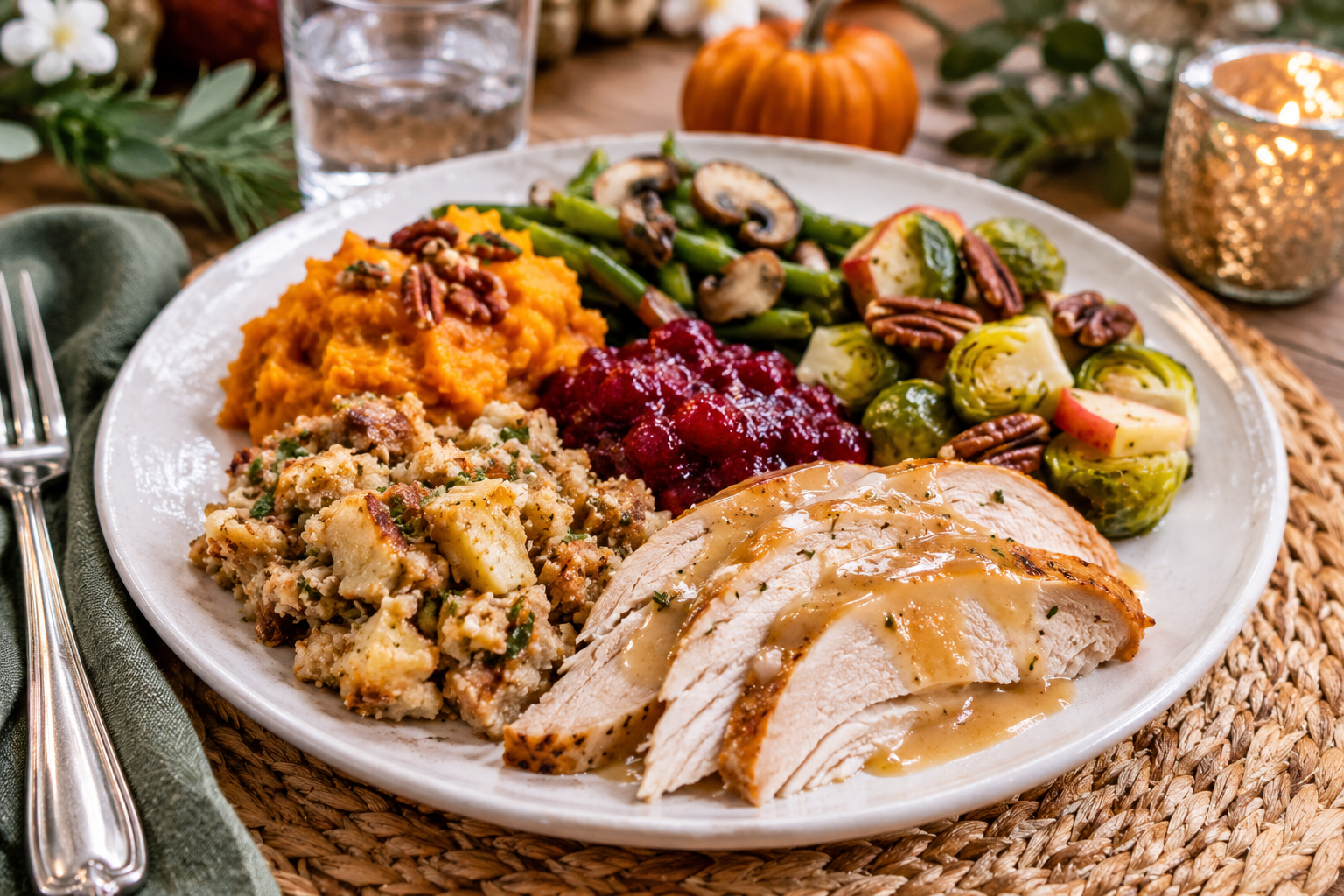
At Thanksgiving, that might mean enjoying roasted turkey, Brussels sprouts, sweet potatoes, stuffing, and cranberry sauce.
You don’t have to eliminate the stuffing or sweet potatoes because they contain carbohydrates. Instead, enjoy them alongside protein and fiber-rich vegetables.
This approach can help create a more satisfying meal and support a steadier blood sugar response.
2. Try Changing the Order in Which You Eat
Here’s something you may not have considered: the order in which you eat certain foods may influence your blood sugar response.
Some research suggests that eating vegetables and protein before carbohydrate-rich foods can help reduce the immediate rise in blood sugar after a meal.
At your next holiday dinner, try starting with your vegetables and turkey before moving on to the stuffing, rolls, or mashed potatoes.
If you’re serving a salad or vegetable-based starter, even better.
You don’t need to follow a rigid eating sequence or separate everything on your plate. Think of this as an optional strategy rather than another food rule.
Research on meal sequencing is still developing, particularly regarding its long-term benefits, but it’s an interesting example of how eating habits can matter alongside food choices.
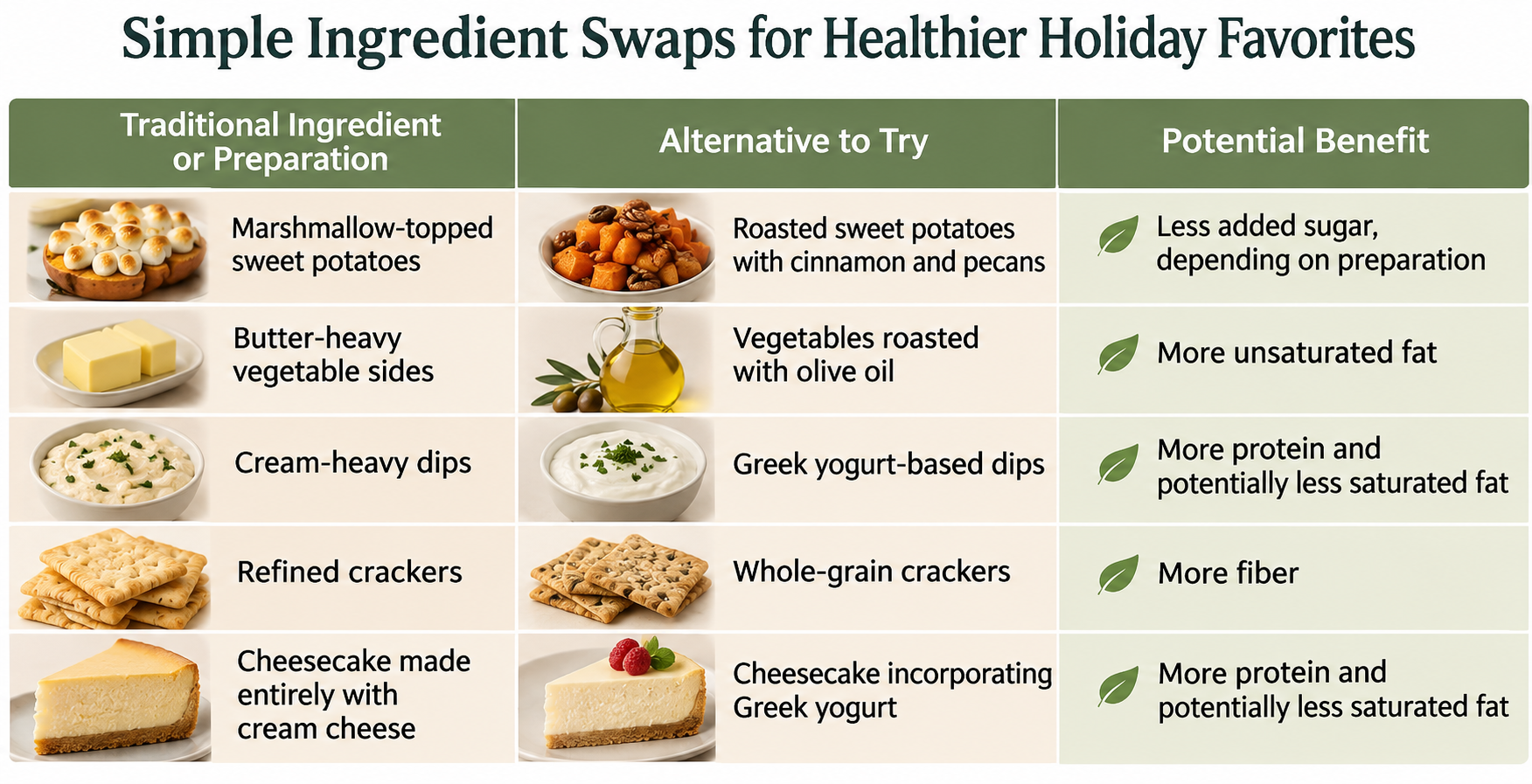
3. Make Small Ingredient Changes That Deliver Real Benefits
You don’t need to turn Thanksgiving dinner into a collection of diet recipes.
Instead, look for opportunities to improve the nutritional value of dishes without sacrificing the flavors and textures you enjoy.
Consider these simple changes:
Looking for holiday recipes that put these ideas into practice?
Try these Thanksgiving favorites:
Each offer a way to bring more variety and plant-based ingredients to your holiday table. Start with one or two changes. Keep the traditions that matter most to you.
4. Take a Walk After Your Holiday Meal
One of the simplest things you can do to support your health after a holiday dinner doesn’t involve changing what you eat.
It involves getting up from the table.
When you move, your muscles use glucose for energy. Research suggests that even short periods of light activity after eating can help reduce post-meal blood sugar elevations compared with remaining seated.
After your Thanksgiving or Christmas dinner, invite your family to take a 10- to 15-minute walk.
Walk around the neighborhood, enjoy the holiday decorations, or simply spend some time outside together.
It doesn’t need to be strenuous, and it certainly isn’t about burning off dessert.
Think of it as a new holiday tradition that supports your health while creating another opportunity to spend time with the people you love.
5. Enjoy Dessert Without Turning It Into an All-Day Event
There’s a difference between sitting down to enjoy your favorite holiday dessert and continuously grazing on sweets throughout the day.
Holiday treats often appear everywhere: on the kitchen counter, in the office break room, at family gatherings, and in containers of leftovers.
You may find yourself eating them simply because they’re available rather than because you particularly want them.
Try being more intentional.
Choose a dessert you genuinely enjoy. Put it on a plate, sit down, and take the time to appreciate it.
Enjoying dessert as part of a balanced meal may also produce a different blood sugar response than eating the same dessert on its own, although individual responses vary.
And if you want another serving of Grandma’s famous pie the following day, that’s fine too.
The goal isn’t to establish more restrictions. It’s to make deliberate choices that support both your health and your enjoyment of food.
6. Give Your Holiday Leftovers a Nutritional Makeover
The holiday meal itself may only last a few hours, but the leftovers can influence what you eat for several days.
Rather than recreating the same holiday plate repeatedly, use your leftovers as ingredients for entirely different meals.
Here are a few ideas:
Turkey and white bean soup: Combine leftover turkey with white beans, carrots, celery, spinach, and broth for a meal containing protein and fiber.
Roasted vegetable grain bowl: Pair leftover Brussels sprouts and sweet potatoes with quinoa, chickpeas, and an olive oil-based dressing.
Turkey and avocado wrap: Add leftover turkey, avocado, leafy greens, and a whole-grain tortilla.
Sweet potato breakfast bowl: Combine leftover plain roasted sweet potatoes with Greek yogurt, cinnamon, and chopped nuts.
You can also freeze suitable leftovers in individual portions to enjoy later.
This approach reduces food waste, adds nutritional variety, and gives you several easy meals without starting from scratch.
7. Focus on the Days Between Celebrations
Thanksgiving dinner isn’t the same thing as six weeks of holiday eating.
Consider how many meals you’ll eat between Thanksgiving and New Year’s. Most of them won’t be holiday celebrations.
Those ordinary meals offer opportunities to support your long-term health by including:
A variety of vegetables and fruits.
Beans, lentils, and whole grains.
Adequate protein throughout the day.
Nuts, seeds, and other sources of unsaturated fats.
Continue making time for regular physical activity, strength training, and adequate sleep.
These everyday habits matter for cardiovascular health, muscle maintenance, metabolic health, and healthy aging.
You don’t need to compensate for a holiday meal by skipping breakfast, exercising excessively, or starting a restrictive diet.
Simply return to the habits that support your health.
Frequently Asked Questions About Healthy Holiday Eating
How can I eat healthier during the holidays without giving up dessert?
Build balanced meals that include protein, fiber-rich vegetables, and healthy fats. Choose desserts you genuinely enjoy and eat them as part of your overall eating pattern rather than treating them as forbidden foods.
What are the healthiest foods to eat at Thanksgiving?
Turkey, roasted vegetables, Brussels sprouts, sweet potatoes, green beans, and nuts can all contribute valuable nutrients. How these foods are prepared and what accompanies them also matter.
Can walking after a holiday meal help with blood sugar?
Light physical activity after eating can help muscles use glucose and may reduce post-meal blood sugar elevations. Even a short walk can be beneficial compared with remaining sedentary.
How can I support healthy cholesterol levels during the holidays?
Include fiber-rich foods such as beans, oats, vegetables, and fruit. Where practical, replace some sources of saturated fat with unsaturated fats from foods such as olive oil, nuts, and seeds. Your overall dietary pattern matters more than a single holiday meal.
Why is protein particularly important after 40?
Maintaining muscle mass becomes increasingly important as we age. Adequate dietary protein, combined with regular resistance training, helps support muscle maintenance, strength, and physical function.
Your Health and Your Holiday Traditions Can Coexist
Improving your health after 40 doesn’t mean saying goodbye to the foods you’ve enjoyed your entire life.
It means understanding how your choices can work together to support your changing health priorities.
Add more fiber to your meals. Prioritize protein. Make thoughtful ingredient substitutions. Take a walk after dinner. Find new ways to enjoy your leftovers.
And when your favorite holiday dessert is served, enjoy it.
Because the purpose of building healthier habits isn’t to spend the rest of your life avoiding the things you love.
It’s to help you enjoy more of the life you love.
Looking for more ways to make healthy eating easier?
Download my free Meals in Minutes Guide for practical ways to incorporate nutritious meals into your everyday life.
